[ROM] Cosmos One + 1 For Cherry Mobile Cosmos One


[ROM] Cosmos One Preview 1

[ROM] Cosmos One Preview 2

[ROM] Cosmos One Preview 3

FEATURES
  • Debloated, deodexed and zipaligned
  • Android Lollipop-inspired Material UI
  • busybox and init.d support
  • Full root access
  • Modified status bar
  • Lollipop text select handler
  • Google Messenger
  • Android Lollipop Launcher
  • Android Lollipop Google Search
  • Google Music
  • Updated Google Playstore
  • Updated Google Playservice
  • and more...

Instructions to flash via CWM/TWRP Recovery:
1. Download Cosmos one+1
2. CopyCosmos one+1 to sdcard
3. Reboot to CWM recovery
4. Select wipe data/factory reset/cache/dalvik
5. Select install zip, choose zip from sdcard
6. Select ROM, Yes - Install
7.wait matapos ang process 
8.reboot ur phone wait nyo lng matapos ang pag boot up...
9.enjoy ur new rom 
REMINDER! Please make sure to back your NVRAM folder or IMEI before Flashing this one!
How to backup your imei [CLICKHERE]

Flash it with your own RISK!!!

I am not responsible for any damage or soft/hard brick will happened to your device!

 Download Link:
Click Here

SPECIAL THANKS:
Arjie QUIRANTE for porting 
CREDITS:
  • Zyvex
  • NeedROM
  • Kards Le Sharpeye (Arjie Rilloraza)
  • Nikko James
  • Gaddiel Dizon Ayson
  • XDA

Hellraid: The Escape Free Download APK+OBB

Hellraid: The Escape Free Download APK+OBB

Hellraid: The Escape is a visually stunning action-adventure game with free updates, no in-app purchases or pay-to-win elements!
Challenging puzzles, free exploration of the game’s world, and demons fought with brains instead of weapons make Hellraid: The Escape an exciting experience unlike any other in the Play Store!


Hellraid: The Escape Free Download APK+OBB Preview 1

Hellraid: The Escape Free Download APK+OBB Preview 2

Hellraid: The Escape Free Download APK+OBB Preview 3

Hellraid: The Escape Free Download APK+OBB Preview 4


‘First Person Puzzling at its Finest’ – TouchArcade (9/10)

‘Hellraid: The Escape is a really great experience full of great gameplay features, nice story and unique atmosphere’ – TouchTapPlay (9.6/10)

‘The entire game is crafted into an extremely immersive experience’ – Applenapps (9/10)

In Hellraid: The Escape, a sorcerer obsessed with dark arts has trapped your soul in a magic prison guarded by demonic creatures. Why are you there? Who are you and why can’t you remember your name? To find the answers, you must first escape from this dimension of agony hung somewhere beyond time.

**********************************************************************************

GAME FEATURES:

* CHALLENGING PUZZLES - every single puzzle is a fresh and unique experience

* FIGHT DEMONS WITH YOUR BRAINS, NOT WEAPONS

* MYSTERIOUS STORY set in the dark fantasy universe of Hellraid

* FREE EXPLORATION AND INTUITIVE CONTROLS

* GRAPHICS OF PC AND CONSOLE QUALITY

* FREE UPDATES, NO IN-APP PURCHASES OR PAY-TO-WIN ELEMENTS

Read more on PLAYSTORE


Download Link:
APK
OBB

Note:
The cache for the game Hellraid: The Escape: unpack the archive folder in / sdcard / Android / obb /
- So you should get /sdcard/Android/obb/com.shortbreakstudios.hr/
- The size of the decompressed cache 440 MB
- Install apk, run the game!

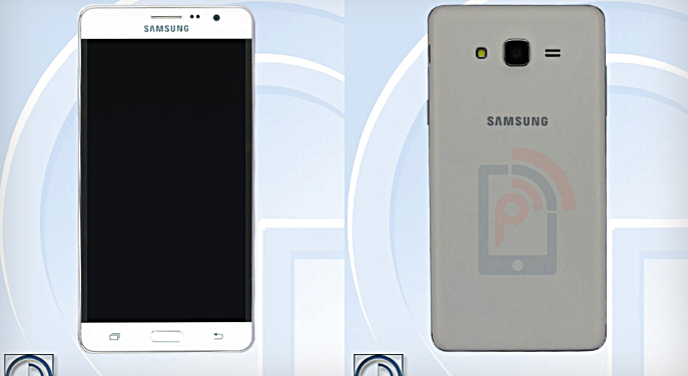
Samsung Galaxy Mega On pays a visit at TENAA

Samsung Galaxy Mega 2015

While we already know that Samsung is working on two new smartphones, dubbed Galaxy Grand On and Galaxy Mega On, the latter (carrying a model number of SM-G6000) has now been certified by China's Telecommunication Equipment Certification Center (TENAA).

The TENAA listing reveals that the device is powered by a 1.2GHz processor, and sports a 5.5-inch HD (1280×720) display. It has 1GB RAM and 8GB of expandable internal memory.

In terms of camera, the Mega On features a 13MP rear unit and a 8MP front shooter. Measuring 151.8 x 77.5 x 8.2 mm and weighing in at 172 gms, the handset runs Android 5.1.1 Lollipop-based TouchWiz UI.

Most of these specs are similar to those of the Galaxy O7, which was recently spotted on GFXBench. This effectively confirms that the Galaxy Mega On and Grand On are nothing but renamed versions of the Galaxy O7 and O5, respectively.

Via


Analyst predicts December launch time-frame for Xiaomi Mi 5

mi5

The Xiaomi Mi 5 smartphone, which is rumoured to be powered by Qualcomm's upcoming Snapdragon 820 SoC, could be launched this year, according to well-known Chinese analyst Pan Jiutang. He had earlier forecasted that the first devices with SD820 chipset would arrive in March 2016.

This comes just weeks after a leaked teaser image of the Xiaomi Mi 5 surfaced online, revealing that the device could possibly pack in a fingerprint scanner.

Other rumoured specs of the Mi 5 include a 5.3" Quad HD display, 4GB of RAM, 16/32GB of internal memory, 16 MP rear and 8 MP front camera, as well as a USB Type-C port. It will run Android 5.1.1 out-of-the-box.


Wi-Fi for Indian Railways and broadband for villages: Key tech announcements from Modi’s US visit

Modi_Mark_640-624x351


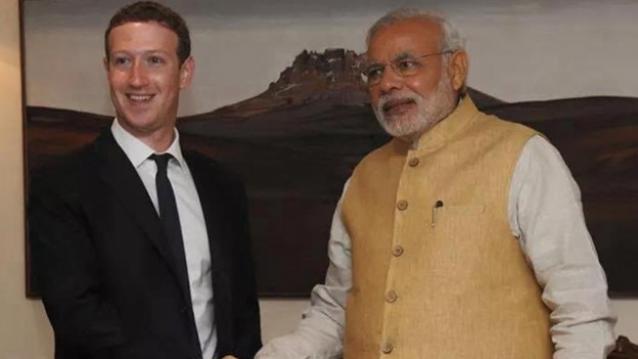
Indian Prime Minister Narendra Modi is on the last leg of his visit to the US. Over the past couple of days, Modi has managed to speak to a host of Fortune 500 CEOs. Among the prominent announcements from Modi’s Silicon Valley visit are:

Google announces plans to offer free Wi-Fi at 500 stations

According to a recent report released by the United Nations Broadband Commission titled, ‘The State of Broadband’ report prior to the Broadband Commission for Sustainable Development said that India slipped in global rankings on broadband penetration.

While many may argue that it is the Government’s responsibility to provide an effective and affordable access to broadband internet, the fact remains that India is now behind countries such as Syria and Sudan in terms of internet penetration.

During PM Modi’s visit to the Google campus during the Code for India hackathon 2015, Google CEO Sundar Pichai announced that Google would be partnering with Indian Railways to provide high-speed broadband internet connectivity at 500 Indian railway stations. Pichai stressed that these connections would enable streaming of high definition video content, stressing that they would not just enable connectivity but enables consumption of high bandwidth video.

Microsoft Broadband connectivity to 5 lakh villages

After Google, it was Microsoft’s turn to sweeten the deal. While Google focussed on high speed connectivity, Microsoft CEO Satya Nadella announced that Microsoft will partner with the Indian government to bring low-cost internet connectivity to 5,00,000 Indian villages.

During the townhall at the Facebook HQ with CEO Mark Zuckerberg, PM Modi responded to a query on how effective the Make in India campaign would be and the ease of changing the course of things. He gave the anecdote of a scooter being driven and how easy it is to divert its course. Modi added that in the case of train, it take time to steer it in a new direction. This was in reference to the scale of India. At the Facebook townhall, Modi highlighted that India has a unique challenge of over 600000 villages.

The announcement by Microsoft couldn’t have come at a better time than when the Digital India initiative has been proposed to the world.

Microsoft data centres in India next week

In his announcement, Nadella added, “A key part of both Make in India and Digital India, bringing world class infrastructure into India, respecting India’s digital security, sovereignty and privacy is a key milestone for us.”

This would enable Microsoft to offer high speed services, cloud hosting, as well as enable scalability to small business, young enterpreneurs and large corporations in India. Interestingly, in March 2010, Microsoft launched the Azure Platform in India.

However, earlier this year, in March 2015, Microsoft had launched the cloud programme for India. The plan to announce data centres in India is quite likely a natural extension to an existing go to market plan for Microsoft. However, the announcement during Modi’s visit to the US has only increased global interest in the development.

Google type in 10 Indian languages including Gujarati

After announcing high-speed internet, Google also announced that users in India would now be able to type in 10 Indian languages. In an official blog post, Google CEO Sundar Pichai said, “To help make web content more useful for Indians, many of whom don’t speak English, we launched the Indian Language Internet Alliance last year to foster more local language content, and have built greater local language support into our products—including Hindi Voice Search, an improved Hindi keyboard and support for seven Indian languages with the latest versions of Android.”

Similar to the case of Microsoft, the announcement by Google invoked significant national interest. Last year, Google had announced the Indian Languages Internet Alliance to work with local languages. In 2014, Google’s Rajan Anandan announced “Google’s Anandan said that the plan was to bring the features to at least the top eight Indian languages within the next 18 months, which would include Bengali, Marathi, Tamil, Malayalam, etc.”

Qualcomm $150 million fund for start-ups

In another announcement that aligns with PM Modi’s plans for the SME and start-up segment, Qualcomm announced support for the Digital India and the Make in India initiative by launching a $150 million venture fund for startups.

According to Qualcomm’s executive chairman Dr Paul Jacobs, the main objective of this fund is to “Fuel innovation and foster promising Indian start ups who are contributing to the mobile and ‘internet of everything’ ecosystem and provide start ups with financial, marketing, technology and business support to help propel them forward in the competitive Indian market.”

Apple to manufacture in India?

In June this year, there were reports of Chinese manufacturer Foxconn planning to set up an iPhone manufacturing plant in India. During the meeting between PM Narendra Modi and Apple CEO Tim Cook, the possibility of manufacturing in India was discussed.

External Affairs Ministry spokesperson Vikas Swarup quoted Apple CEO Tim Cook as saying during the interaction, “We have a unique tie with India. Our founder Steve Jobs went to India for inspiration.”

Facebook embraces Digital India

During the townhall at Facebook HQ, CEO Mark Zuckerberg announced that before Facebook made it big, and before things worked well, they hit a rough patch.

Zuckerberg said, “Early on in our history when things weren’t really going well – we had hit a tough patch and a lot of people wanted to buy Facebook – I went and I met with Steve Jobs and he said that to reconnect with what I believed was the mission of the company, I should go visit this temple in India that he had gone to early in the evolution of Apple, when he was thinking about what he wanted his vision of the future to be.”

Zuckerberg did heed the advice. And spent a month visiting India. He added that seeing the way people connected in India made him believe that the world would be a better place if everyone had a stronger ability to connect. Zuckerberg changed his profile picture to support the ‘Digital India’ initiative.


Huawei Nexus 6P presentation slide leak reveals metal body, 3450mAh battery and more

nexus_6p_imgur_leak

The Google Nexus devices launch is scheduled to take place in two days’ time, but the leaks just keep pouring in. After the leak of the packaging details, a new dump of slides meant for promotional and marketing purposes has surfaced on Imgur.
Nexus-6P-1
We already know that the Huawei Nexus 6P smartphone is rumoured to sport a 5.7-inch QHD screen translating to 2560 x 1440 pixels, a metal body, Snapdragon 820 SoC and a fingerprint reader.

According to a report, the device will have an internal storage of up to 128GB.

The latest slide details also mention the presence of a 3450mAh battery and it mentions the chipset as Qualcomm Snapdragon 810, instead of 820. The Nexus 6P will be an all metal phone, so there would most likely be no wireless charging feature. It will sport Corning Gorilla Glass 4 on the display for added durability. It will weigh around 178 grams which is lighter than the 184 grams Nexus 6.


Nexus-6P-2

As expected, the phone is expected to sport the USB Type-C connector for charging and data transfer. One of the slides shows the finger-print scanner on the rear side.

Apart from the phone, one of the slides also talks about Android 6.0 Marshmallow, highlighting key features such as fingerprint verification support, freedom to choose what data to share with your apps, new battery standby system and of course Now on Tap which will throw up contextual answers.
Nexus-6P-3


Google, which is set to host an event on September 29 in San Francisco, is gearing up to launch two new Nexus smartphones, one made by LG and other one by Huawei.


Fictional internet policy is bad for India, good only for Facebook

facebook_logo_new-624x351


By Eben Moglen & Mishi Choudhary 

Manu Joseph is widely considered to be a particularly accomplished novelist. As an Internet policy analyst, however, he has trouble telling fact from fiction.

Writing in the New York Times on 16 September, Mr Joseph – newly reborn as an admirer rather than a skeptic of Mark Zuckerberg’s altruism – hotly defends Mr Zuckerberg’s “Internet.org” scheme. He accuses of gluttony those of us who think the world’s poor deserve the same security and openness of the Internet as the world’s rich. We use all the broadband in India, Mr Joseph says; therefore we can afford to condescend to the poor by demanding for them the same Internet we use and that they, he says, will never be able to afford, unless they get the shoddy equivalent offered by Zuckerberg.

It was not always thus. Writing in the same newspaper a mere six months ago, in mid-April, Mr Joseph caustically described the Zuckerberg scam as it really is: “The goal of Internet.org is to bring cheap Internet to all, as long as they use Facebook.”

Not just use Facebook, Mr Joseph might have gone on to explain – in the sense of live their social lives under its ever-present deep inspection surveillance – but also agree to put all their traffic through its servers. They must surrender their data security (of banking, buying, or whatever else they do on the Net) because Zuckerberg’s “man in the middle” attack breaks it. They must give up any idea of anonymity or personal privacy in any of their online life. Zuckerberg’s Internet.org service – recently renamed Free Basics – is a way of bugging the entire Internet, not just Facebook itself, for hundreds of millions of users, because that kind of rotten service is all, being poor, we can “afford” to give them. Mr Joseph knew that in April.

But what a difference six months makes. Reborn as a Facebook-enthusiast and Zuckerberg-admirer, Mr Joseph now tell us that “the minority of Indians who consume most of the nation’s bandwidth [want] to pass legislation that would deny free Internet access to the poor.” Ghosts, in Mr Joseph’s novels, have been known to do some remarkable things; apparently now they also write his columns. He should not let them.

Requiring Indian telecommunications network operators to preserve the integrity of the Net, and the equality of all its users, does not deny free Internet access to the poor. It would, however, prevent Zuckerberg from ripping off the Indian poor and calling it charity. We do indeed think that would be a good thing, as have the nations around the world (including the Netherlands, Canada and Chile) that have banned the practice. Needless to say, Mr Joseph does not remind anyone that he used to think so too.

Zuckerberg’s “Free Basics” is a scam against its supposed beneficiaries for several reasons. First, rather than offering “the Internet,” his service requires its users to route all their traffic to “free websites” through his servers, where the users’ identities are logged so that their traffic can be paid for by the spy, rather than by them. So the first actual charge is that the poor will be comprehensively surveilled by Facebook, losing any shred of personal privacy, while the rich using the real Internet do not route all their traffic through Facebook.

Second, Zuckerberg destroys the security of his users, the benefited poor. As announced, Zuckerberg’s service prohibited all use of the secure web protocol HTTPS (the one that lights up the little lock image on the status bar of your browser). HTTPS, and its authentication mechanism, are the only reasons that online banking and e-commerce are safe for consumers. So not only were the Indian poor to lose all chance of anonymity on the Net with respect to Zuckerberg, but they were also to abandon any possibility of common safety in the Net.

Naturally, these technical details eluded Mr Joseph, whose newfound sentimental attachment to Internet.org has nothing to do with facts. But ever since the required insecurity of the Internet.org architecture came to wide notice late this summer, observers around the world have been watching the desperate charm offensive of the Facebook crowd.

This has included flying groups of Indian reporters business class to California at Facebook’s expense to hear presentations about the wonders of Zuckerberg’s Schweitzer-like commitment to human welfare. They’ve been dancing as hard and as fast as they can, hoping to defuse all opposition this week, before Prime Minister Modi visits the Facebook campus. Some of their dancing, apparently, has been done for Mr Joseph, and it has worked. But they didn’t make it to deal time before the wheels fell off the car.

Facing inevitable exposure of the full-Monty cynicism behind this “humanitarian” gesture, as the world press and policy communities caught on, Zuckerberg has resorted to rewriting the script during the premiere. So Facebook admitted that this is no charity, just a commercial offer to buy the Indian poor’s de-anonymized traffic at a cheap rate. And, to confuse the issue of his destruction of their security, Zuckerberg announced also a “technical fix.”

Traffic between users and the Facebook middleman will now be encrypted using HTTPS, and will then be forwarded on to the actual website provider, semi-securely. All users’ supposedly-secure data will exist in unencrypted form on the Facebook servers (momentarily, we are assured). But the user will be unable to authenticate the identity of the website to which the data is then forwarded by the Zuck in the middle, because HTTPS authentication of the destination is broken.

This half-measure sounds, or is intended by the conman to sound, like half-security. But it isn’t. As any specialist or common sense will tell you, the chain of a web transaction is no stronger than its weakest link. No one using “Free Basics” will ever be able to assure herself that the bank or store or government services website she thinks she’s using is genuine, because the architecture still breaks the “authentication” pathway between the user and the remote system.

Zuckerberg’s greed to absorb the world’s web traffic in order to mine the data of people around the world continues to destroy all security on the Net for those poor enough to need subsidized Internet service. The poor deserve the same sanitation, health care, drinking water, primary and secondary education, and network communications as the rich. It is the responsibility of society to provide them.
As our organization, SFLC.in, has shown, Indian telecommunications network operators have made immense super-competitive profits from mispriced data services in India, made possible in large measure by the pervasive political corruption indulged in by the prior Congress Party government. Fair regulatory pricing of telecommunications tariffs in India would allow the Indian poor access to data service, as they now have access to mobile telephony, at prices they can afford.

India’s first BJP government made that happen, and its second could provide Indians with an Internet that reflects the world’s largest democracy’s commitment to equality and human dignity. It has no need of the supposedly-humanitarian assistance of a dataminer and conman. Nor do we need this sudden, surprising outburst of Mr Joseph’s ill-informed and recently-converted condescension.

Prof. Eben Moglen is the Founding-Director of Software Freedom Law Center (also a professor of law and legal history at Columbia University) and Mishi Choudhary is the Executive Director at SFLC.IN